
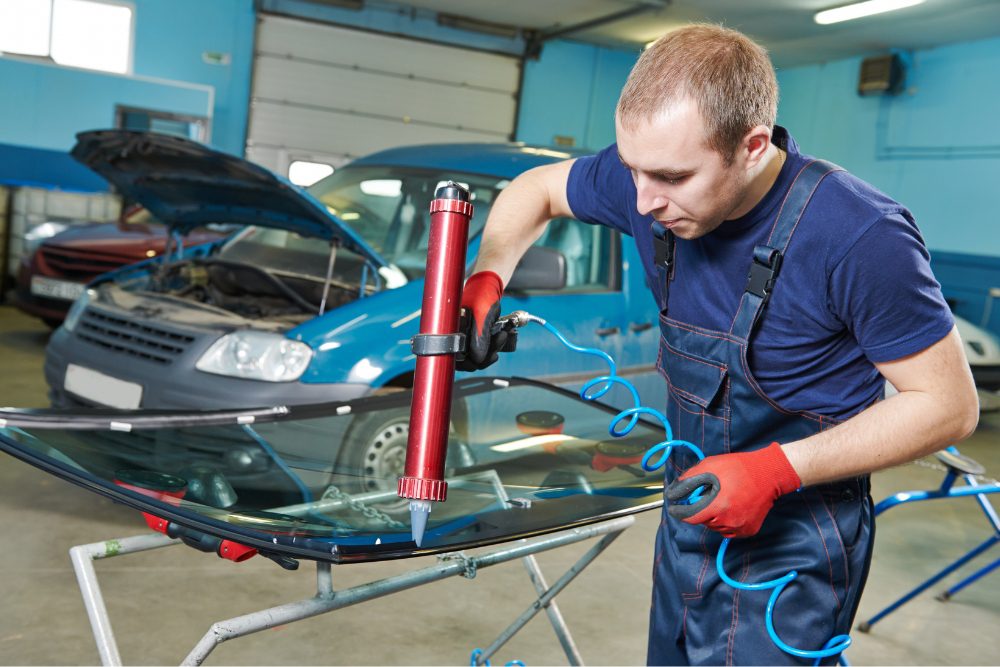
Replacing your windshield isn’t just about aesthetics—it’s a matter of safety, precision, and clarity. Over time, even the most durable auto glass succumbs to wear: micro-scratches scatter sunlight, moisture distorts reflections, and small cracks amplify glare. These subtle flaws gradually steal sharpness from your field of view. A new windshield restores that lost transparency, removing years of accumulated distortion. When installed with professional accuracy, it reestablishes the seamless alignment your vehicle was designed for, enhancing your awareness of the road ahead. Beyond visual improvement, a replacement resets the entire sensory connection between driver and environment. Light, distance, and motion regain their true relationship. With every drive, the world ahead looks clearer, safer, and sharper—exactly as it should.
Renewing Clarity Behind the Wheel
A new windshield does more than erase cracks; it revitalizes the very essence of your driving vision. Each imperfection, no matter how small, bends light in unpredictable ways, creating halos around headlights and sunbursts during midday drives. Over time, those distortions become dangerous distractions, forcing your eyes to adjust constantly. Replacing the windshield brings back a balanced light flow, allowing your eyes to relax into a natural focus.
Beyond comfort, the precision of installation matters deeply. When fitted properly, the glass restores the factory alignment between roofline, pillars, and dashboard reflections. That perfect geometry sharpens visual judgment, particularly during turns or sudden stops. Every second regained in reaction time matters, and clean, undistorted vision gives you that edge. Driving no longer feels strained—it feels instinctive again.
The Subtle Danger of Scratched Glass
Tiny scratches often start unnoticed—tiny arcs formed by sand, dust, or wiper movement over years of driving. Yet under sunlight or the glare of oncoming headlights, these shallow marks refract light in unpredictable directions, turning your windshield into a scatter of tiny mirrors. That fragmented reflection doesn’t just blur your surroundings; it weakens your ability to judge distance and detail, especially during dusk or early dawn when contrast is already low. Each glare forces your eyes to readjust, straining muscles that should be focused on movement, not distortion. What begins as minor inconvenience quietly turns into a safety concern hidden in plain sight.
Replacing the windshield resets this optical balance entirely. A fresh surface restores transparency to its intended state—smooth, uniform, and predictable under every lighting condition. Water beads glide cleanly, headlights lose their halos, and your field of vision becomes stable once more. Even windshield wipers, once grinding dust into glass, move effortlessly across a new pane. The result feels like someone has not only replaced glass but restored your perception of reality itself. The road becomes legible again—edges, lines, and motion all aligning naturally with how your brain interprets space and depth.
How Light Transmission Shapes Your Drive
Windshields are engineered with specific light transmission values, designed to admit enough light for clarity while filtering harsh intensity that strains the eyes. Over time, exposure to UV radiation, weather, and cleaning chemicals slowly breaks down these coatings. The shift is subtle but significant—too much light creates glare; too little dims peripheral awareness. Old glass often alters the way your brain interprets brightness, forcing your pupils to overwork, leading to fatigue and slower reactions. You may not notice it consciously, but the long-term strain reshapes your comfort and response time behind the wheel.
A new windshield reinstates that delicate optical equilibrium. With precise transmission ratios restored, colors appear balanced again, and light reenters the cabin in its natural spectrum. Daytime glare softens into clarity; nighttime illumination becomes crisp without dazzling the senses. The human eye thrives on consistency, and replacement glass gives it exactly that. Every road sign, every shimmer of motion becomes part of a coherent visual rhythm. It’s not the highway that changes—it’s your eyes finally seeing it as intended.
The Aerodynamic Advantage of a Fresh Fit
A windshield does more than shield you from wind—it shapes how your vehicle interacts with air. Even the smallest misalignment or warped seal can disrupt the aerodynamic flow, creating turbulence that affects visibility in unexpected ways. Those invisible air pockets promote fogging, alter how water disperses, and even generate subtle optical distortions through uneven pressure. A professionally replaced windshield restores the car’s original aerodynamic precision, ensuring air glides seamlessly over the glass instead of colliding against it.
That smoothness pays off in clarity and comfort. Fogging decreases because internal and external temperatures stabilize faster, preventing condensation buildup that obscures sightlines. Drivers notice the difference most during rapid climate changes—rainstorms, sudden cold fronts, or early morning drives. The new windshield becomes part of a refined ecosystem of balance between light, air, and temperature. The smoother the fit, the clearer your perspective. What once felt like a constant battle against fog and glare transforms into fluid, uninterrupted visibility.
Safety in the Smallest Details
When a windshield cracks, the danger extends beyond what meets the eye. This pane of glass contributes up to 30% of a vehicle’s structural strength during rollovers, supporting both the frame and the roof. Even a hairline fracture weakens that integrity, turning a vital safety feature into a potential liability. The windshield also controls how airbags deploy, ensuring they cushion passengers rather than misfire outward. Replacing damaged glass isn’t just preventive care—it’s a structural necessity that preserves every layer of your car’s protection system.
Safety, however, also lives in perception. A fractured field of vision alters how you interpret motion and distance, slowing reaction times in critical moments. Once replaced, that distortion disappears. Every reflection, shadow, and outline appears precisely where your instincts expect them to be. Your hands move before your mind tells them to, responding to a clearer picture of what lies ahead. A new windshield becomes a silent reinforcement of both machine and human safety—a union of strength and sight that protects in ways you don’t even have to think about.
The Psychological Impact of Clear Vision
Human focus depends heavily on visual stability. When the world in front of you flickers through scratches or haze, your mind subconsciously compensates, forcing your eyes to strain for coherence. Over hours of driving, that strain morphs into fatigue, headaches, and lowered concentration. You start missing details—a sign, a curve, the brief shimmer of brake lights in rain. The more you push through, the heavier that invisible burden becomes. Clouded glass isn’t just a physical barrier; it’s a psychological one, fragmenting the connection between awareness and control.
Replacing the windshield is like clearing mental clutter. As clarity returns, your perception relaxes, and driving becomes more intuitive. Light refracts evenly, colors appear true, and every motion feels synchronized with your reactions. The journey no longer demands forced attention—it flows naturally. What once felt like effort becomes rhythm, a state where confidence and composure replace strain. In this balance of focus and freedom, a new windshield doesn’t just clear your view; it steadies your mind.
Energy Efficiency Through Optical Precision
Modern vehicles depend on sensors embedded around or behind the windshield—cameras, rain detectors, and lane assist systems all rely on optical clarity. When the glass deteriorates, these technologies misread the environment, forcing your car to work harder to correct errors. The energy spent recalibrating sensors or adjusting responses translates to wasted fuel and unnecessary strain on the system. What seems like minor distortion can ripple through your vehicle’s entire efficiency chain.
Installing a new windshield brings precision back to the equation. Clean, correctly aligned glass transmits data-rich light without interference, letting sensors interpret traffic, distance, and lane markings with minimal correction. The driver feels the benefit instantly—smoother braking, consistent lane tracking, and reduced drag from properly sealed edges. Efficiency becomes holistic, where human sight and machine vision function in unison. The drive feels lighter, and the car performs closer to its engineered potential.
The Role of Modern Glass Technology
Today’s replacement windshields have evolved beyond the simple transparent shield of the past. They integrate advanced optical coatings, acoustic layers, and infrared reflectors designed to enhance both safety and comfort. These upgrades manage heat and glare, filter UV radiation, and even reduce outside noise levels. The result isn’t just clearer visibility—it’s a more controlled driving environment, where your senses remain focused on the road instead of reacting to distractions.
When you install modern replacement glass, you’re investing in precision manufacturing that supports advanced driver-assistance systems and long-term durability. The materials resist weathering, keeping visibility consistent over time. This upgrade makes every journey quieter, cooler, and visually sharper. As sunlight scatters across your new windshield, reflections align perfectly, allowing you to see with renewed definition. It’s not merely a replacement—it’s an evolution in how vision and technology merge inside your vehicle.
Restoring Harmony Between Driver and Machine
The windshield is the unsung translator between human and machine. When damaged, it introduces subtle miscommunication—distorted reflections, broken sightlines, mismatched perception. Replacing it reestablishes the design harmony engineers intended, where visibility, airflow, and cabin acoustics synchronize as one system. Every contour of the glass was shaped to complement the vehicle’s dynamics, and with new installation, that harmony is reborn.
In this restoration, your driving experience becomes smoother, almost symphonic. Steering feels more responsive because your visual alignment matches the car’s motion. Noise fades, vision sharpens, and the boundary between you and the machine softens until driving feels instinctive again. The windshield is no longer a sheet of glass but a tuned instrument channeling the car’s rhythm back to you. Each journey becomes less about mechanics and more about seamless connection.
From Obstruction to Illumination
Aged windshields dull the world—years of grit, pits, and discoloration build a haze that dims every beam of light. It’s like looking through a fine film that thickens slowly enough for you not to notice. But once replaced, the transformation feels startling. Suddenly, light enters cleanly, depth returns, and colors regain their vibrancy. Driving becomes less about squinting and more about seeing, as if the road itself were newly revealed.
This change goes beyond aesthetics. Clear glass enhances depth perception, allowing your eyes to interpret distance and motion precisely. Reflections behave predictably again, restoring your confidence in speed and proximity. Each mile feels smoother because every image your brain processes aligns perfectly with reality. In essence, replacing your windshield renews how you experience movement, turning every trip into a rediscovery of light, space, and freedom.
Conclusion
Replacing your windshield is far more than a mechanical fix—it’s an act of renewal. Every fresh layer of glass restores visual accuracy, structural stability, and mental calm. From the way light moves across your dashboard to how your senses respond to the road, the benefits ripple through every part of your drive. You regain not only vision but balance, efficiency, and safety.For expert windshield replacement and repair, trust Vista Glass Marana in Marana. Their skilled technicians ensure every installation meets factory precision, giving you back clarity and peace of mind. Call 520-999-2659 or email CSR@vistaglass.com to restore your view and rediscover the road as it was meant to be seen.