
The world of windshield replacement is no longer confined to glass and glue. It’s evolving into a blend of precision technology, adaptive materials, and eco-conscious innovation. As vehicles become more intelligent, their windshields transform from mere barriers into interactive safety instruments. The year 2023 marks the threshold of a new era in auto glass repair and replacement, where calibration tools, camera sensors, and AI-assisted adhesives redefine craftsmanship.
Beyond the technical marvel, this transformation also changes the customer experience. Repair shops are adapting—offering mobile diagnostics, instant resin curing, and sustainable disposal practices that reduce environmental impact. The future belongs to clarity, both in vision and in service. With every innovation, windshield replacement becomes not just a necessity, but an evolving science rooted in precision and care. Let’s look ahead at what’s steering the industry into tomorrow’s landscape of possibilities.
Emerging Trends in Windshield Technology
The modern windshield is evolving into a multifunctional hub that interacts with the vehicle’s electronic ecosystem. Glass manufacturers are experimenting with electrochromic technology—where transparency adjusts automatically according to sunlight intensity. This development minimizes glare, improves comfort, and saves energy on air conditioning.
Another growing innovation involves embedding sensors directly into the glass surface. These micro-components sync with advanced driver-assistance systems, ensuring that lane departure alerts and collision warnings operate seamlessly. The focus is shifting from repair convenience to integrated safety. As 2023 progresses, expect more vehicles to feature “smart glass” capable of auto-tinting and internal display projection, merging digital precision with traditional craftsmanship.
Smart Windshields and Connected Vehicles
The rise of connected vehicles has transformed the humble windshield into a dynamic digital companion. Smart windshields now serve as both protection and projection, displaying critical navigation data, traffic alerts, and even augmented reality guidance directly in the driver’s field of view. These interactive displays replace distractions with clarity, allowing drivers to process real-time information without diverting their gaze from the road. The integration of sensors and holographic projection transforms glass into an intelligent interface, one that listens and responds to the surrounding environment.
Technicians are now faced with a dual challenge—balancing the mechanical precision of glass installation with the delicate process of digital recalibration. A modern replacement isn’t just about sealing edges; it involves synchronizing sensors, calibrating cameras, and updating vehicle software. Connected cars exchange a constant flow of information, making every windshield replacement an act of digital coordination. The smart glass era has arrived, bridging physical craftsmanship with invisible data networks. The windshield no longer exists merely to block wind and debris—it has become the medium through which the vehicle speaks.
Advanced Driver Assistance System Calibration
When a vehicle’s windshield houses Advanced Driver Assistance Systems, its replacement demands far more than skill—it requires flawless precision. Cameras, radar sensors, and lidar arrays depend on exact alignment to interpret surroundings correctly. A misalignment as small as a millimeter can distort object detection or lane tracking, risking safety. The process has evolved into a hybrid operation of mechanics and digital engineering, where human intuition works hand in hand with calibration software. Technicians no longer rely on experience alone; they rely on data, lasers, and calibration grids to restore harmony.
By 2023 and beyond, ADAS recalibration has become an inseparable step in every professional windshield replacement. Specialized facilities now feature computerized alignment bays that simulate real-world driving conditions, ensuring each sensor performs flawlessly. What once took manual adjustment now demands digital accuracy and patience. The blend of craftsmanship and science ensures the vehicle’s safety systems remain as sharp as their creators intended. In essence, every successful calibration safeguards not only the vehicle’s intelligence but the driver’s confidence.
Eco-Friendly Windshield Manufacturing
The future of windshield manufacturing leans toward sustainability, where every step—melting, forming, and fitting—honors both innovation and the environment. Glass producers are now investing in low-emission furnaces, recycling broken panes, and experimenting with biodegradable adhesives that reduce chemical runoff. These practices cut carbon footprints and redefine what responsible manufacturing looks like. The result is a clear, durable, and environmentally considerate product that aligns with modern ecological standards.
Consumers, too, have become more discerning. They look for auto glass services that reflect a commitment to sustainability, rewarding companies that use non-toxic sealants and water-based bonding agents. In an industry once defined by disposal, the cycle now bends toward renewal. Eco-friendly windshield production is not just an ethical statement—it’s a technological pursuit toward balance. With every recycled shard and cleaner adhesive, the road becomes not only safer but also greener, proving that clarity doesn’t have to come at nature’s expense.
The Rise of Mobile Windshield Replacement Services
Convenience has rewritten the rules of auto glass care. Mobile windshield replacement services have evolved from niche offerings into the modern standard, bringing certified technicians directly to drivers wherever they are—at home, at work, or stranded roadside. These professionals arrive equipped with advanced adhesives, precision calibration tools, and climate-controlled systems that guarantee flawless results regardless of location. The service embodies the freedom of movement while maintaining the same standards once found only in specialized shops.
This transformation redefines how customers perceive auto repair. It’s no longer a chore requiring hours in a waiting room—it’s an experience shaped around comfort and flexibility. By minimizing downtime, these mobile solutions save time and restore safety faster than ever before. The future belongs to accessibility, and mobile glass repair exemplifies how innovation can align with practicality. It’s craftsmanship that travels, proof that professionalism doesn’t need a fixed address to leave a lasting impression.
The Role of Artificial Intelligence in Glass Diagnostics
Artificial intelligence is quietly reshaping the precision of windshield inspection. Through advanced imaging systems and predictive analytics, AI can identify stress fractures and micro-fissures invisible to human eyes. These algorithms analyze pixel-level patterns to forecast how and when a crack may expand under heat, vibration, or impact. This predictive accuracy allows technicians to make informed decisions—choosing repair over replacement when possible, and replacement when safety dictates necessity.
By embedding AI into diagnostic procedures, auto glass services have entered a new age of accuracy and speed. It minimizes human error while streamlining decision-making, ensuring that every step is supported by data-driven insight. For customers, it translates to fewer surprises and longer-lasting results. AI has become the silent partner in precision glasswork—a technician that never blinks, ensuring that every pane of glass is installed, bonded, and inspected with near-perfect foresight.
New Adhesive Formulas for Stronger Bonds
Adhesive science has evolved alongside modern vehicles, producing compounds designed for strength, flexibility, and environmental resilience. New urethane-based formulas cure rapidly, adhere under extreme temperatures, and maintain elasticity during vehicle movement. This chemistry ensures the windshield remains perfectly sealed through every vibration, road impact, and temperature swing. Drivers benefit from shorter safe-drive times, meaning vehicles can hit the road again sooner without compromising integrity.
These innovations are more than just technical upgrades—they represent a shift toward smarter bonding. The materials adapt to the car’s structural dynamics, creating a partnership between glass and frame that’s both flexible and firm. Such adhesives extend lifespan, enhance crash resistance, and elevate safety benchmarks. Every bead of sealant now carries years of research, reflecting a future where even invisible components contribute to performance. The bond that holds glass to metal is no longer silent; it’s engineered to last.
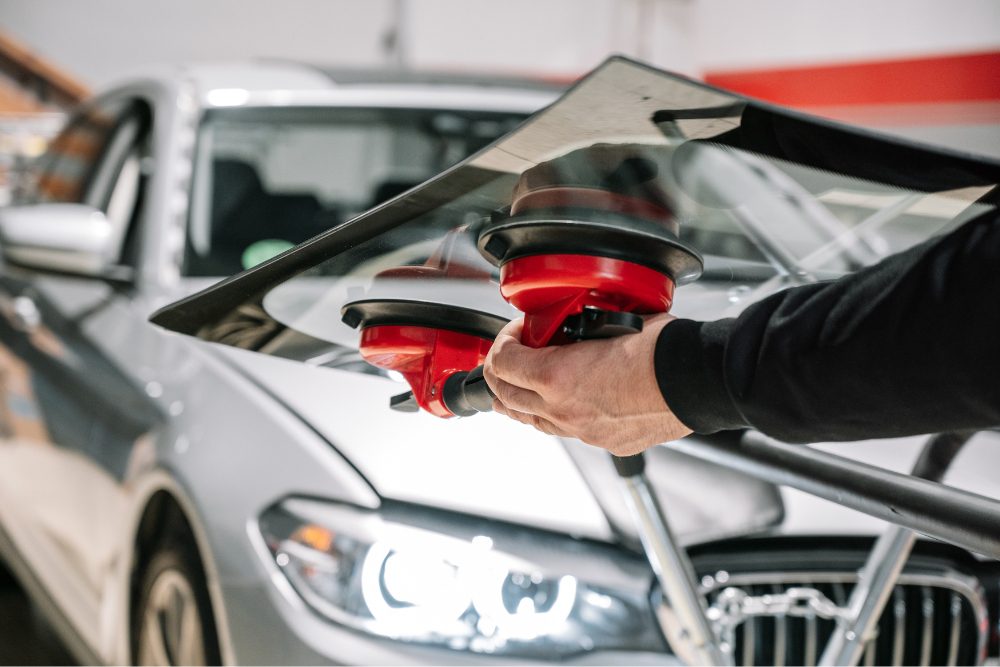
The Impact of Autonomous Vehicles on Windshield Design
Autonomous vehicles are reshaping every element of car design, and windshields are no exception. As vehicles begin to think and react on their own, the glass before the driver becomes both a sensor platform and a projection surface. Transparent conductive coatings enable radar transmission and data exchange, turning windshields into active communication layers between the vehicle and its surroundings. The glass no longer separates interior from exterior—it unites them through intelligent responsiveness.
In this emerging era, every square inch of glass holds potential for interaction. Instead of merely shielding passengers from the elements, the windshield now assists in interpreting them. Future iterations may display environmental data, pedestrian movements, or route maps directly on the surface. This vision merges design with data, creating vehicles that see and think through their own glass. The windshield becomes not just protection, but perception itself.
Augmented Reality Integration in Auto Glass
Augmented reality is transitioning from novelty to necessity in next-generation auto glass. The concept of displaying navigation routes, speed indicators, or hazard alerts directly onto the windshield eliminates the need for dashboard glances. AR transforms driving into a guided visual experience, blending the physical and digital seamlessly. The information appears exactly where the driver needs it, creating a safer, more intuitive way to interact with technology while staying focused on the road.
To support AR systems, manufacturers are developing optical-grade glass with minimal reflection and distortion. The precision required for installation surpasses traditional standards, demanding both digital calibration and mechanical perfection. In the near future, AR-equipped windshields will become standard, filtering into everyday models beyond luxury vehicles. What once belonged to science fiction now glows in real traffic—proof that innovation can illuminate both safety and imagination on the open road.
Predictive Maintenance and Real-Time Monitoring
Predictive maintenance represents one of the most significant breakthroughs in modern auto glass care. Through embedded sensors and real-time diagnostics, vehicles can now monitor windshield integrity constantly. The system alerts drivers to pressure changes, adhesive fatigue, or environmental stress before visible cracks appear. This preemptive insight transforms maintenance from reaction to prevention, ensuring cost savings and uninterrupted safety.
Technicians benefit equally from these smart monitoring systems, which transmit live data about temperature shifts and stress levels. Armed with such information, they can plan proactive service intervals and make more accurate repair recommendations. The result is a transparent dialogue between car and craftsman, one that builds trust through precision. Predictive maintenance transforms every windshield into an intelligent participant in its own longevity—a guardian that watches itself so the driver doesn’t have to.
Future Training and Certification for Technicians
As vehicles evolve, so does the expertise required to maintain them. The next generation of auto glass technicians must master both mechanical skill and digital literacy. Training programs now emphasize software diagnostics, sensor recalibration, and the synchronization of electronic safety systems. The technician’s toolbox has expanded to include laptops, coding equipment, and augmented reality calibration interfaces. This hybrid skill set merges craftsmanship with engineering, ensuring that every replacement restores a vehicle’s technological harmony.
Certification is becoming the industry’s backbone, verifying that professionals are equipped for the complexity of modern vehicles. As glass technology continues to integrate with artificial intelligence and connectivity, the margin for error narrows. A qualified technician must interpret data, recalibrate sensors, and execute precision installations that meet automotive safety standards. The evolution of the craft mirrors the evolution of the machines themselves—a partnership of innovation, discipline, and pride in technical mastery.
Conclusion
The transformation of windshield replacement unfolds as a story of evolution, blending craftsmanship with innovation. Each new advancement—smart glass, eco-friendly materials, artificial intelligence, predictive maintenance—brings the industry closer to an age of intelligent precision. Vehicles now demand not just clear glass, but connected glass, capable of interpreting data and safeguarding lives. The windshield has become an active participant in the driving experience, where vision, safety, and technology converge.
For those in Marana seeking exceptional craftsmanship and forward-thinking service, Vista Glass Marana continues to lead the way. Their dedication to precision, sustainability, and innovation ensures every replacement meets the standards of tomorrow. Experience their expertise by reaching out today at 520-999-2659 or emailing CSR@vistaglass.com. The future of windshield care is here—and it begins with clarity in every sense of the word.